Inductive drug hunters supporting your program
Enhance your program with dedicated medicinal chemistry, computational chemistry, and DMPK support from Inductive's team, where we leverage our decades of real-world experience applying the latest computational and AI tools to help you discover development candidates that fit your target profile.
The right expertise isn’t always available
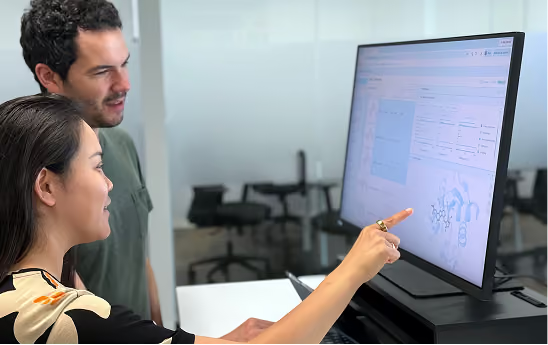
Discovery teams must advance programs quickly but often lack the med chem, comp chem, and DMPK resources, as well as the computational tooling needed to explore all of the compelling design strategies. Building the appropriate internal expertise can take years, and adding headcount is not always prudent.
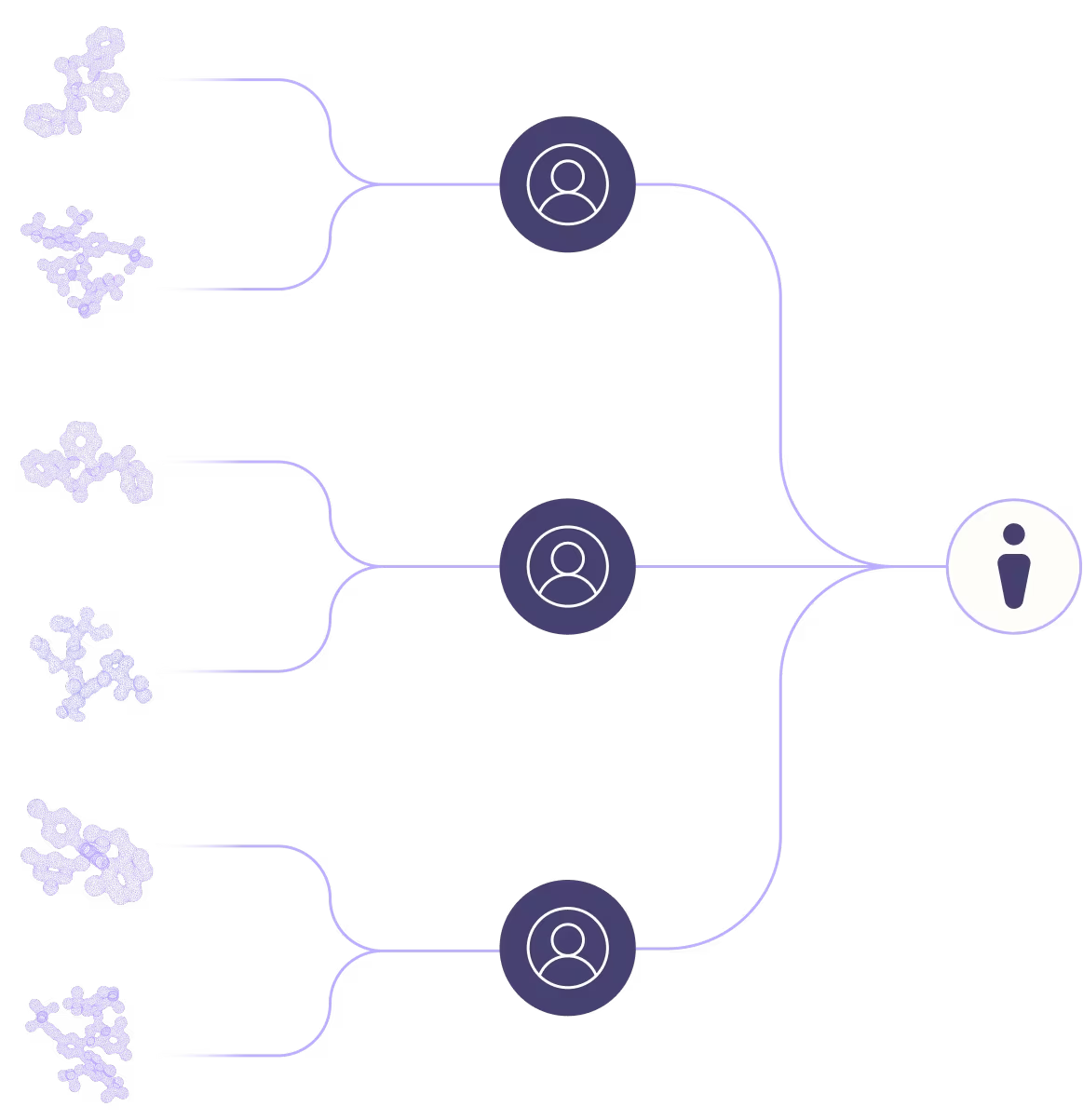
Our scientists support your program with a virtual lab
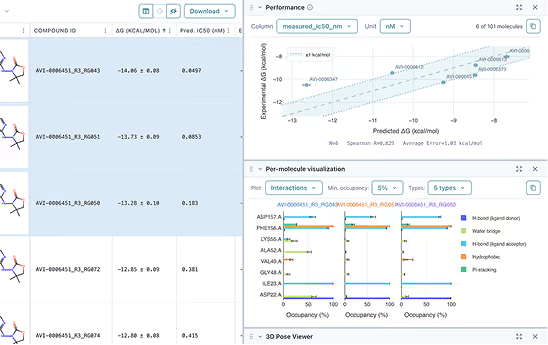
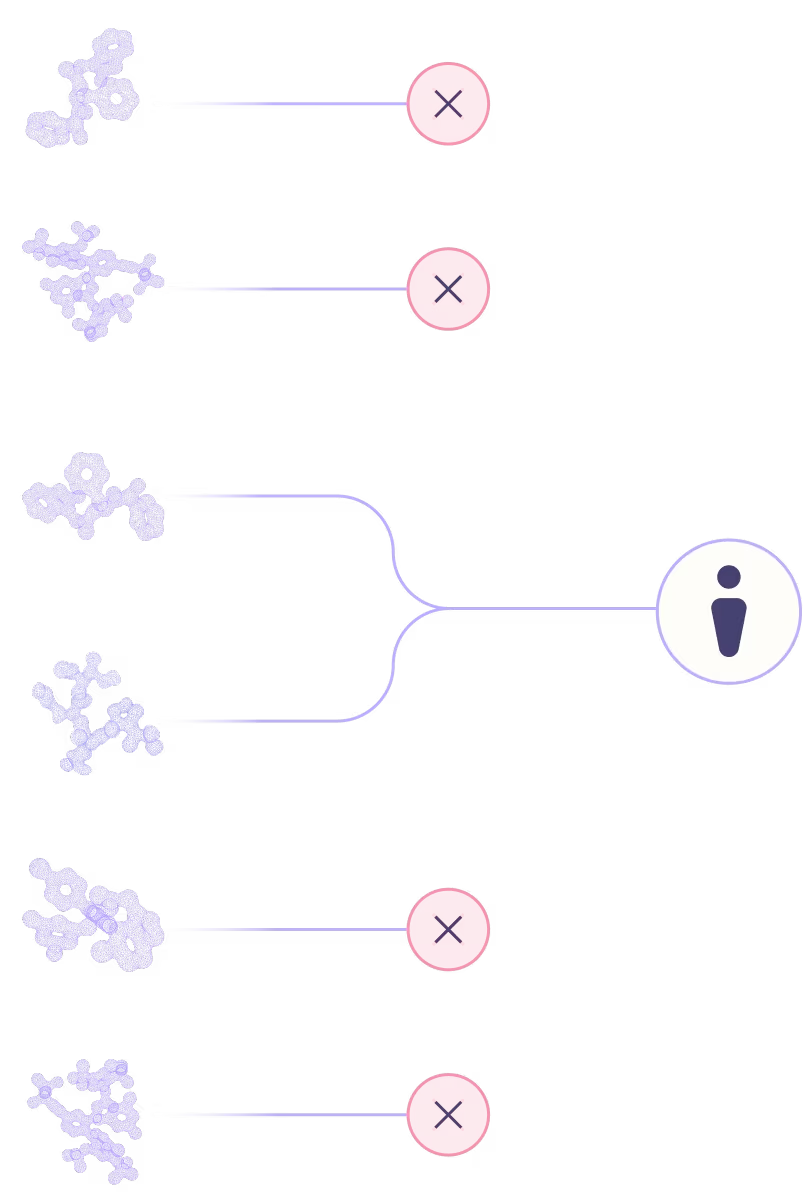
Inductive deploys a virtual lab adapted to your program’s chemical matter, validates program-specific models (e.g. FEP, PK), supports design cycles, and brings your team analyses and design ideas with predictions and reasoning attached. Your chemists decide what gets made.
The engagement scales with the program rather than with a hiring plan.
[how it works]
How we support your program
Potency Modeling
Predict and optimize binding affinity with physics-based and AI methods, including FEP & cofolding.
Dose Projection
Estimate clinical dose from preclinical data to guide compound selection.
PK/PD Modeling
Characterize exposure-response and projected efficacious dose in humans.
SAR Analysis
Identify structure-activity drivers and design focused analog sets.
[evidence]
Prioritizing a development candidate shortlist
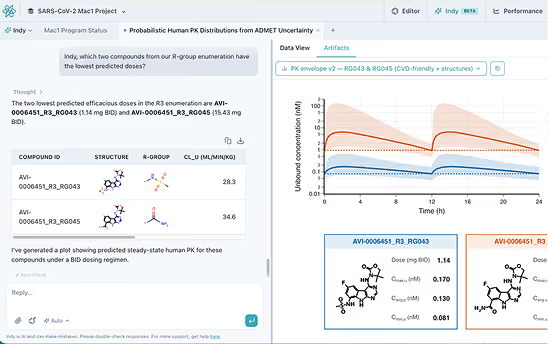
Aleksia Therapeutics had three late lead-optimization compounds that all cleared the program's ADME/PK criteria, each with a defensible case depending on which property you emphasized. Our embedded scientists translated the preclinical data into probabilistic human dose projections, propagating uncertainty from both the measurements and the extrapolation methods, to help provide clarity on the most compelling compound. The same analysis showed the team that repeating two inexpensive in vitro assays helped dramatically reduce dose uncertainty, for a fraction of what another PK study would have cost.

The Inductive team, including a chemist in the loop and ML engineer, is actively engaged and has made substantial contributions to the design process. All combined, the Inductive platform and team have helped Belharra to rapidly progress our lead program.
Justin Ernst
SVP and Head of Chemistry
Expand your capacity without adding headcount